Contact Us To Schedule Service
Interested in one of our services? Fill out the quick form to your right and we’ll be in touch very shortly.
Additionally, you can email us and we’ll respond within 24 business hours.
We Offer 5% Senior Discount!
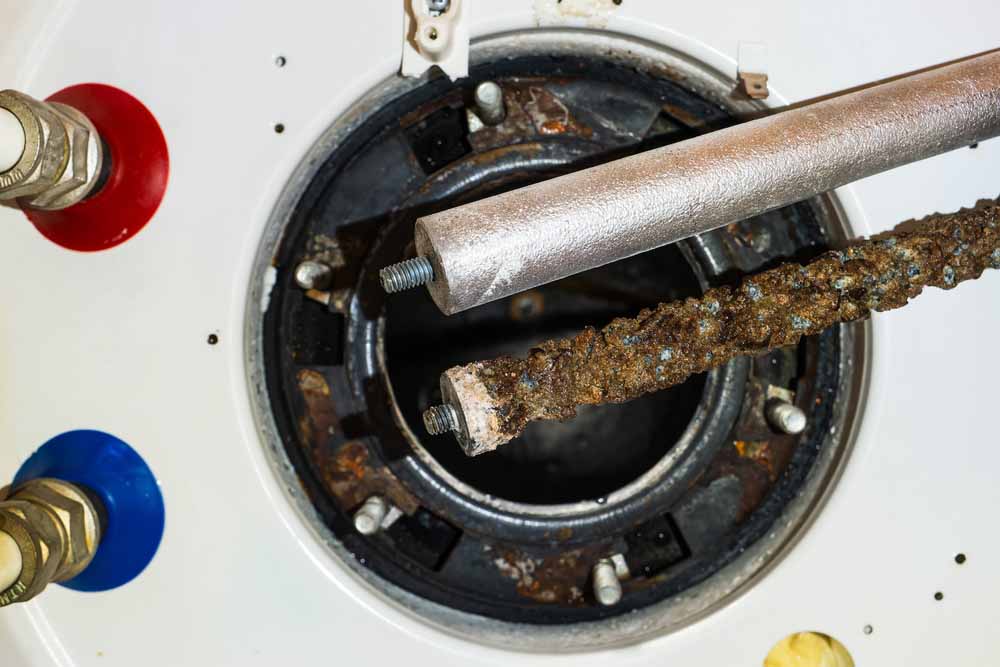
Most homeowners never think about what is happening inside their water heater until the hot water disappears or rust-colored water starts coming from the tap. What many people do not realize is that every tank-style water heater has a built-in part designed to wear out on purpose. It is called the anode rod, and it quietly helps protect the inside of the tank from corrosion day after day.
Homeowners in need of water heater repair in Greenwich, CT, are often surprised to learn that replacing this one part can dramatically extend the life of their system. This is why the JNR Plumbing team regularly inspects anode rods because they play such an important role in keeping water heaters operating properly.
The Small Metal Rod Doing the Dirty Work
An anode rod is a long metal rod, usually made from magnesium or aluminum, installed inside the top of a water heater tank. Its job is to attract corrosive minerals and elements found in water before they can attack the steel tank itself. The process is called galvanic corrosion. According to the U.S. Department of Energy, water heater tanks naturally corrode over time because of constant exposure to heated water and dissolved minerals. The anode rod sacrifices itself first by drawing corrosion toward the rod instead of the tank lining. Without a working anode rod, the steel tank becomes vulnerable to rust, leaks, and sediment damage much sooner.
Warning Signs Your Anode Rod May Be Worn Out
Many homeowners never inspect the anode rod because it is hidden inside the tank. Still, there are several signs that may point to deterioration.
Some common clues include:
- Rust-colored hot water
- A rotten egg smell from hot water taps
- Popping sounds caused by sediment buildup
- Reduced hot water performance
- Visible corrosion around the unit
These symptoms do not always mean the tank has failed, but they often signal internal wear that should be checked during professional water heater services.
Why Timing Matters More Than People Think
Most manufacturers recommend inspecting or replacing the anode rod every three to five years depending on water quality and household usage. Homes with hard water may wear through rods faster because of increased mineral content. Research from the International Association of Certified Home Inspectors notes that replacing the anode rod regularly can significantly extend the lifespan of a standard tank water heater. In some cases, homeowners may get several additional years from the same unit before considering a water heater replacement. A neglected rod, however, allows corrosion to attack the inside walls of the tank once the metal has fully deteriorated.
Tank Water Heaters and Tankless Systems Need Different Care
Traditional storage tanks rely heavily on anode rods because water remains inside the tank continuously. A tankless water heater operates differently since it heats water on demand without storing it in a large tank. However, that does not mean tankless systems are maintenance-free. Mineral buildup, scale accumulation, and heating component wear can still affect performance over time. Regular inspections help keep both types of systems operating safely and efficiently.
A Simple Maintenance Step With Long-Term Benefits
Anode rod replacement is not usually part of what homeowners think about during routine maintenance, yet it has a direct effect on the lifespan of the water heater itself. Replacing a worn rod costs far less than dealing with a leaking tank or water damage from corrosion.
During inspections, plumbers also check for sediment buildup, pressure concerns, and signs that a failing unit may need a replacement before larger problems develop.
Frequently Asked Questions
How long does an anode rod last?
Most anode rods last between three and five years, though water quality can shorten or extend that timeframe.
Can I replace an anode rod myself?
Some homeowners attempt it, but the rod can be difficult to access and remove without professional tools.
What happens if the anode rod is never replaced?
Once the rod deteriorates completely, the tank itself becomes the next target for corrosion.
Does every water heater have an anode rod?
Most traditional tank-style water heaters do. Tankless systems typically do not use them.
A longer-lasting water heater often comes down to catching small problems early. JNR Plumbing is the company you can count on for expert services from water heater installation right down to maintenance and repairs. With real-time tracking, transparent and reliable pricing, and safety-first professionalism, our team helps Greenwich homeowners keep hot water systems operating at their best. Get in touch with us to schedule an appointment today!

Book your service today, look over our available appointments, and pick a time frame that is convenient for you.
