Contact Us To Schedule Service
Interested in one of our services? Fill out the quick form to your right and we’ll be in touch very shortly.
Additionally, you can email us and we’ll respond within 24 business hours.
We Offer 5% Senior Discount!
A slow drain or a clog that won’t budge is annoying enough on its own. So when a store shelf offers a $20 drum auger as the fix, it’s tempting to grab one and handle it yourself. Sometimes that works fine. Other times, the same tool that clears a hair clog in a bathroom sink can crack an old pipe, push a blockage deeper into the line, or turn a one-hour job into a multi-day repair.
Drain snaking is a real, useful method, and it’s a method professionals utilize every day for drain cleaning in Wilton, CT. The difference between a DIY snake and a professional one usually isn’t the basic concept. It’s what happens when the person holding it can’t see what’s on the other end of the cable, doesn’t know what the pipe is made of, or applies force in the wrong direction. Here are five specific ways that can go wrong and what they mean for your plumbing.
1. The Cable Can Scratch or Puncture Older Pipe Materials
Homes in and around Wilton span a wide range of ages, and older properties often still have original cast iron, clay, or Orangeburg (a bituminous fiber pipe used through the mid-1900s) somewhere in the drain line. These materials don’t handle abrasion the same way modern PVC does.
A rigid, unguided cable pushed by hand or a cheap drum auger can scrape the interior wall of an already-thinning pipe. Cast iron corrodes from the inside out over decades, so what looks like solid metal on the outside can be paper-thin on the inside. A cable that catches on a rough spot and gets forced through can open a small crack that turns into a leak weeks or months later, often inside a wall or under a slab where it’s not obvious until water damage shows up.
Professional drain snaking takes the pipe material and condition into account before applying pressure, while cable speed and direction are carefully controlled.
2. Guesswork on Depth and Direction Can Push the Clog Further In
A basic hand-crank auger typically reaches a few feet. That’s often enough for a sink trap or a shower drain. It is rarely enough to reach a clog sitting in a main line, especially in a two-story home or one with a finished basement.
When the cable runs out of reach before it hits the actual blockage, some people respond by pushing harder, forcing the cable, or running it back and forth repeatedly. Instead of breaking up the clog, this can compact loose debris (grease, wipes, paper) into a denser mass further down the line, or wedge it into a fitting or elbow joint where it’s harder to reach later. What started as a partial blockage can become a full one.
3. Tree Roots Need a Different Tool Than a Basic Snake
Connecticut’s older, tree-lined neighborhoods come with a common underground issue: roots seeking out moisture find their way into small cracks or joints in sewer lines, especially clay and older cast iron pipe. Root intrusion doesn’t look like a typical clog, and it doesn’t respond to a standard drain snake the way a soap and hair clog does.
A basic auger might cut a small channel through root growth, giving the appearance of a fix. But it doesn’t remove the roots or address the crack they grew through. The line clogs again, often within weeks, and each attempt to snake through the roots by hand risks tangling the cable or snapping it off inside the pipe, which then requires a separate retrieval job just to get the broken cable out. Root intrusion typically needs a cutting head designed for it, not a basic clog auger.
4. A Snake Can Miss (or Mask) a Structural Problem
Not every slow drain is caused by material stuck inside the pipe. Bellied pipe sections (where part of the line has sunk and created a low spot), pipe misalignment, or a partial collapse can all cause the same symptoms as a clog: slow drainage, gurgling, or backups. Running a cable through a section like this might temporarily clear standing water without fixing anything structural.
The risk here isn’t the tool itself so much as what it doesn’t tell you. A clog that comes back every few weeks despite repeated snaking is often a sign of something the cable pushed through rather than solved. Continuing to snake the same recurring backup can delay a repair that only gets more disruptive (and more expensive to access) the longer it’s left alone.
5. Cable Left Behind Becomes Its Own Blockage
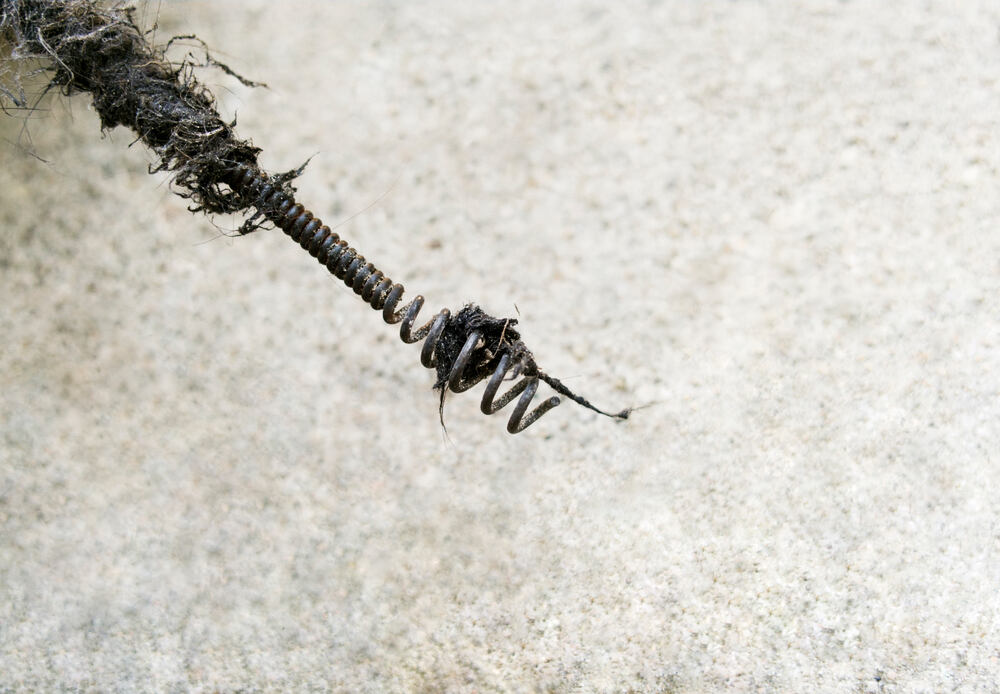
It’s more common than people expect: the tip of a consumer-grade snake breaks off, gets stuck in a joint, or simply can’t be retrieved after it’s been pushed too far. Some cables are also not rated for the torque used to break through a tough clog and can kink or separate.
A piece of cable lodged in the line becomes a new obstruction. It catches debris, hair, and grease going forward, and it’s not something a second pass with the same tool can pull out. At that point, clearing the drain requires locating and removing the stuck cable before the original clog can even be addressed, which is a more involved job than the one that started it.
Signs Your Drain Needs More Than Drain Snaking
A few patterns tend to show up specifically in the situations described above, and they’re worth knowing before you reach for a second attempt with a store-bought auger.
More than one drain is affected. If a toilet flush causes water to rise in a shower or floor drain, or two separate fixtures back up around the same time, the problem is in the main line, not an individual fixture. A hand snake reaching a few feet won’t get anywhere near it.
The clog returns within days or weeks of clearing it. A drain that’s genuinely clear tends to stay clear for a while. A fast repeat backup usually means something wasn’t fully removed, such as root intrusion left in place or debris that was compacted rather than cleared.
Water drains slower after snaking, not faster. This can point to a cable that pushed material further down the line instead of breaking it up, or a section of pipe that’s been scratched and is now catching more debris than before.
Gurgling or bubbling from other fixtures. Air trapped behind a blockage further down the line often shows up as gurgling in a nearby drain, even one that isn’t clogged itself. This is a sign the issue is further into the system than a fixture-level snake can reach.
Any of these is a reasonable point to bring in professional drain cleaning services rather than repeating the same DIY step and hoping for a different result. Our team at JNR Plumbing uses advanced diagnostic technology to identify what’s actually causing a blockage, whether it’s grease buildup, root intrusion, a structural issue, or something else, before deciding how to clear it, so the fix matches the actual cause instead of just the symptom.
Frequently Asked Questions
How do I know if my clog is a simple fixture issue or a bigger main line problem?
A clog affecting just one drain (a single sink or tub) is usually local to that fixture’s trap or line. If multiple drains back up at once, or a toilet flush causes water to rise in a shower or floor drain, that points to a main line issue that needs a different approach than a fixture snake.
Is it ever okay to use a store-bought drain snake myself?
For a shallow clog in a single fixture, like a bathroom sink or tub drain, a basic hand tool can work fine. The risk increases with older pipe, main lines, or a clog that’s already resisted a first attempt, since those situations call for equipment and cable control that consumer tools aren’t built for.
Why does my drain clog again a few weeks after I cleared it myself?
This is often a sign the original method cleared standing water without resolving what caused the blockage, whether that’s root growth, a buildup further down the line, or a low spot in the pipe. A recurring clog is worth having looked at rather than snaked repeatedly.
Can a broken drain snake cable really get stuck in my pipes?
Yes. Cheaper cables can kink, separate, or lose their tip under enough resistance, and once a piece breaks off inside the line; it has to be located and removed before the original clog can be cleared.
Talk to JNR Plumbing About a Clog That Won’t Quit
If a clog keeps coming back, sits somewhere hard to reach, or you’re just not sure what’s causing it, our team can help you figure out the actual cause before recommending a fix. We combine master-level expertise with real-time tracking, so you know where things stand throughout the job, not just at the end. We also offer transparent, reliable pricing, comprehensive warranties on our work, and a senior citizen discount along with financing options for larger repairs. As a locally rooted plumbing company, we know the kinds of pipe materials and drain issues common to homes in this area.
Call JNR Plumbing to talk through what’s going on with your drain and get a straight answer on the best way to clear it.

Book your service today, look over our available appointments, and pick a time frame that is convenient for you.
